Description
Product Description
Hands-Free Disposal for Safer Waste Handling
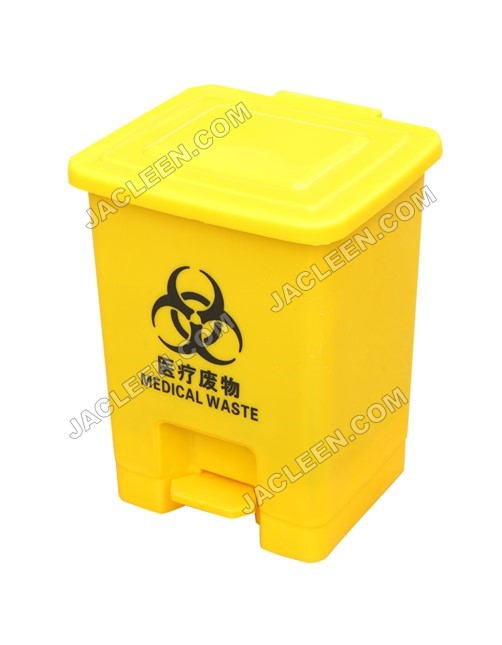
This biohazard waste bin, part of Jacleen’s Cleanmax waste management range, is designed for the safe, hands-free disposal of medical and bio-hazardous waste in clinical and healthcare settings. Its pedal-operated lid means staff never need to touch the bin directly to dispose of waste, an important detail in environments where reducing contact points helps limit cross-contamination between patients, staff, and visitors.
Built for Clear Waste Segregation
Finished in bright yellow, a colour widely used to visually flag biohazard and medical waste, this bin helps staff and visitors immediately recognise it as a designated disposal point separate from general waste. Clear colour-coding like this supports proper waste segregation, which matters for infection control and safe handling procedures across clinics, hospitals, laboratories, and dental practices. Keeping biohazard waste visibly separated from general rubbish from the point of disposal onward reduces the risk of mishandling further down the waste stream.
Suited for Everyday Clinical Use
At 15 litres, this bin suits smaller treatment rooms, consultation areas, and individual workstations where waste volume is moderate rather than continuous. It’s a practical fit for:
- Clinic treatment and consultation rooms
- Dental practice workstations
- Laboratory benches and testing areas
- Small hospital wards or nursing stations
Need a different size or higher-capacity option for your facility? Get in touch with our team, we can advise on the right setup for your space.
Frequently Asked Questions (FAQs)
What goes in a biohazard waste bin?
A biohazard waste bin is used to dispose of waste contaminated with potentially infectious materials. This includes waste contaminated with recognizable human blood, fluid human blood, blood products, other potentially infectious body fluids, and containers or equipment containing these materials. Proper disposal helps reduce the risk of infection and ensures compliance with healthcare waste management guidelines.
What are examples of biohazard waste?
Common examples of biohazard waste include sharps such as needles and scalpels, pathological waste including human or animal tissues and organs, microbiological waste such as laboratory cultures and specimens, and materials contaminated with blood or other infectious bodily fluids. These items require special handling and disposal to prevent the spread of disease.
How should you dispose of biohazard waste?
Biohazard waste should be collected in a rigid, puncture-resistant container labelled with a biohazard symbol or appropriately colour-coded. Containers should be sealed when they are about three-quarters full and disposed of according to local healthcare or hazardous waste regulations. Proper handling helps protect healthcare workers, waste handlers, and the public from exposure to infectious materials.
Is urine considered a biohazard?
Urine from a healthy person is generally not considered a biohazard. However, it may be treated as biohazardous waste if it contains visible blood, originates from a person with certain infectious diseases, or is involved in a spill that poses a risk of bacterial contamination. Disposal requirements should always follow local health and safety regulations.
What is the difference between biohazard and hazardous waste?
Hazardous waste is dangerous because of its chemical properties, such as flammability, corrosiveness, toxicity, or reactivity. Biohazardous waste, on the other hand, contains biological materials that can spread infectious diseases, including blood, laboratory cultures, contaminated sharps, and other infectious waste. Each type requires different handling and disposal procedures.
What items are considered biohazard waste?
Biohazard waste may include human blood, bodily fluids, human tissues, pathological specimens, laboratory cultures, contaminated sharps, infected animal tissues, and disposable items contaminated with these materials, such as gloves, dressings, gauze, and protective equipment. These items should always be disposed of in designated biohazard waste containers to ensure safe handling and compliance with health regulations.