
Every hotel needs cleaning equipment, but not every hotel needs the same setup. A 20-room boutique property and a 200-room business hotel face very different housekeeping demands, and buying the wrong machine or tool often means wasted budget and slower turnaround times.
If you already know which categories of cleaning equipment for hotel operations you need, such as trolleys, vacuums, and floor machines, this guide takes the next step: how to choose the right one for your property, your team, and your budget.
Start With Your Hotel’s Layout and Traffic
Before comparing machines or brands, take stock of your property itself. A hotel with a large lobby, banquet hall, or long corridors will need equipment built for coverage and speed, such as ride-on or wide-area floor scrubbers. A smaller property with mostly guest rooms and limited public space may only need compact, manoeuvrable tools that fit through doorways and around furniture.
Foot traffic matters too. Areas near entrances, restaurants, or event spaces get dirty faster and need equipment that can be deployed quickly between uses. Mapping out your busiest zones first makes it easier to prioritise where to invest.
Match Equipment to Flooring Type
Flooring is one of the biggest factors in equipment selection, and it’s also where many hotels get it wrong by buying one machine to handle everything.
Carpeted Areas
Guest rooms and corridors with carpet need vacuum cleaners with strong suction and, ideally, HEPA filtration to manage dust and allergens. For deeper cleaning, a carpet extraction machine helps maintain appearance and hygiene over time, especially in high-traffic corridors.
Hard Flooring (Tile, Marble, Wood)
Lobbies, dining areas, and bathrooms usually have tile, marble, or wood flooring. These surfaces call for floor scrubbers or polishers rather than vacuums. Marble in particular needs machines and pads designed not to scratch or dull the surface, since refinishing a marble lobby floor is far more costly than buying the right equipment from the start.
Mixing flooring types across a property often means you’ll need more than one type of machine. Trying to force a single all-purpose unit to handle both carpet and marble usually leads to underwhelming results on both.
Consider Your Housekeeping Team Size and Workflow
Equipment should fit the people using it, not the other way around. A small housekeeping team benefits from lightweight, easy-to-operate tools that reduce physical strain and don’t require extensive training. Larger teams working across multiple floors may get more value from equipment that’s slightly more advanced but built for faster, repeatable results across many rooms per shift.
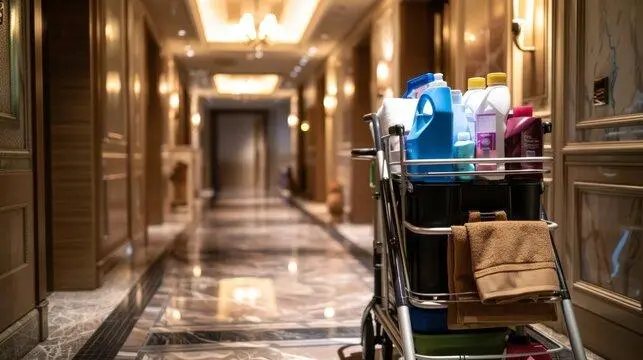
It’s also worth thinking about how your team currently works. If trolleys are frequently overloaded or staff make repeated trips to the storeroom, that’s usually a sign the trolley setup or supply organisation needs rethinking before you invest in new machines.
Don’t Overlook Machine Maintenance and After-Sales Support
Cleaning machines are a long-term investment, and how well they’re supported after purchase matters as much as the machine itself. Before buying, check:
- Whether spare parts and consumables (pads, filters, brushes) are readily available
- Whether the supplier offers servicing and repairs locally
- The expected lifespan of the machine under daily commercial use
- Warranty coverage and what it actually includes
A cheaper machine with poor local support can end up costing more in downtime and repairs than a slightly pricier one backed by reliable servicing.
Budget Smart: Upfront Cost vs Long-Term Value
It’s tempting to choose based on upfront price alone, but commercial-grade equipment should be evaluated on cost per use over its lifespan. A durable machine that lasts several years and handles daily use without breaking down often works out cheaper than replacing a budget unit every few months.
That said, budget does matter, especially for smaller properties. In these cases, it can help to prioritise investment in the equipment used most often (such as vacuums and trolleys) while phasing in specialised machines like floor scrubbers as the budget allows.
Common Mistakes Hotels Make When Buying Equipment
Even experienced operations teams fall into a few predictable traps when purchasing new machines or tools.
Buying based on brand alone. A well-known brand doesn’t automatically mean the machine suits your property. Specifications, capacity, and local support matter more than name recognition.
Ignoring noise levels. Machines used during the day, especially in occupied corridors, should operate quietly enough not to disturb guests. This is often overlooked until complaints start coming in.
Underestimating training needs. Even simple machines perform poorly in untrained hands. Factor in a short training session whenever new equipment is introduced, so staff use it correctly from day one instead of falling back on old habits.
Overbuying capacity. Larger isn’t always better. A heavy-duty ride-on scrubber might be overkill for a property with limited open floor space, and it can be harder to manoeuvre and store than a smaller walk-behind unit.
Avoiding these missteps usually comes down to one thing: involving your housekeeping supervisors in the buying decision, since they’re the ones who use the equipment daily and can flag practical issues before a purchase is made.
How Often Should Hotels Replace Cleaning Equipment?
Replacement schedules vary by equipment type and usage intensity, but a few general guidelines help with planning:
- Vacuum cleaners used daily across multiple rooms typically last two to four years before performance drops noticeably.
- Floor scrubbers and polishers can last five years or longer with proper maintenance, though motor and battery components may need earlier attention.
- Trolleys tend to last the longest, often five to ten years, provided wheels and frames are checked periodically for wear.
- Small tools like mops, cloths, and brushes should follow a shorter replacement cycle, usually every few months, since worn tools directly affect cleaning quality.
Building a simple replacement schedule based on these ranges helps hotels budget ahead rather than reacting only when a machine breaks down mid-shift.
Quick Checklist Before You Buy
- Have you assessed your flooring types across all areas?
- Does the equipment size and weight suit your team and space?
- Is local servicing and spare parts availability confirmed?
- Have you compared cost per use, not just the upfront price?
- Does the supplier understand hospitality-specific needs, not just general cleaning?
Choosing the right equipment isn’t just about the tools themselves. It’s about matching those tools to your property’s layout, your team’s workflow, and your long-term operational needs. Getting this right from the start saves time, reduces maintenance costs, and keeps your housekeeping operations running smoothly.
If you’re still deciding on the right cleaning equipment for hotel use at your property, it often helps to talk it through with someone who works with hospitality properties regularly. Our team at Jacleen is happy to walk through your needs and recommend the right setup, just drop us a message on WhatsApp and we’ll help you get started.